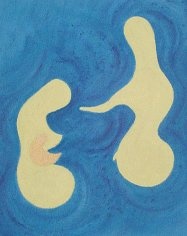
Between one illusion and another

Standard

Poem / Philosophical breakthrough following painful events / New direction ……

heartline
I love you all – but what’s the point –
We can’t change anything –
We are who we are –
So let’s let go of this old fantasy –

After all – if it’s only a game
We play here – nothing matters –
Who we are, what we do –
It’s only a choice of character

And role – we can re-write the script,
Yeah sure – do whatever fits
In each moment we play –
So long as you don’t throw yourself away

For you are the fundamental actor
Behind the stories and scenes
You so consistently deliver
To tease your body and mind.

It’s fine, we could play for all time
And not cover every imaginable insight,
for the possibilities are infinite,
so you might as well laugh, and try

to enjoy the ride you’ve got
until you stop and climb on another one.
You are the one who puts all the pieces in place
So that you can trip out again and again

Until one day you return
To the original script-writing room
To review and learn what you might have missed
Before you come back for more adventures –

So you may as well grab the chance
To get quite a few themes in
While you’re here this time anyway,
Gets a heads-up on your creative skills –

You might as well turn
Your hand to as many things
As you can, just to see
What might happen –

Just to feel what it’s like
To be in for each particular ride.
Whether you end up laughing or crying –
Remember it’s just like a movie.

Don’t get sucked in to the terrible pain,
Just move on to your next creation,
And don’t fear the many alternative endings,
Just create your own next act, scene, stage –

Who knows, it could even be delicious
If you start to get a handle on this
World of interacting holographic multi-
Sensory things you keep on dreaming up.

There is power in knowing
That it doesn’t matter that it doesn’t matter.
Life is not serious – it’s a hoot!
I’m off to make fantasies of a different nature,

A series of illusions within an illusion
In which one thing will always be clear –
Each will seem very real,
But will be shattered and rebuilt into another –

Just to illustrate the point,
And to have fun while doing so,
Of course, otherwise there would be no
point. Wanna play?

xxxxxxxxxxxxxxxxxxxxxxxxxxxxxxxxxxxxxxxxxxxxxxxxxxxxxxxxxxxx

Watch the Global Premiere of Origins the Movie

Standard

From November 13th through November 22nd, watch the feature-length movie Origins for FREE from filmmaker Pedram Shojai. #OriginsFilm @Well_Org

via Watch the Global Premiere of Origins the Movie.

Lots of great health & nutrition info in here too

On NOT being a guru

Standard

i.m.h.o.

heartline

I don’t believe anyone should set themselves up as some sort of guru – but I do think one should be one’s OWN guru.

You can use higher levels of consciousness to question your own thoughts and actions.  Use your mind, heart, body, and soul in partnership – to be true to one’s self, to learn about our existence and our wonderful planet, and to grow ever wiser – yet always question one’s own wisdom with humility, recognizing that we can never know things for sure – it’s all opinion, perspective, emotional filtering – depending on one’s own past experiences etc.  Yet we can reduce that filtering effect by letting go of past programs to see things more clearly and lovingly, more openly (non-judgementally), and to respond objectively rather than being sucked into a subjective reaction.  There are many tools we can use to help us progress or simply to remind us of what we already know we should be doing.

I don’t think people should shut themselves off from the world either, except perhaps for short periods, if one is going to focus on learning to meditate or to study the wilds by immersing themselves totally in a part of nature for a while.  But sooner or later we must bring back what we have learned and apply it to living in the day-to-day world successfully.  Everything can be integrated into a wholesome, balanced way of living – at peace with both the inner (one’s core self) and the outer (everything around you).

We can be in constant contact with Sublime One-ness in everyday life!

I do not wish to focus on the idea of “helping” or seeking to “help” either.  I merely want to share what I have learnt, experienced, created, etc, so that anyone who may choose to access it may do so.  I do think I have good stuff to offer because I have really spent a lot of time learning and practising things, and can save people time on their own journeys and offer useful tips and guidance along the way; but I share with humility, always remembering that everything I say or write is only “in my humble opinion”, and acknowledging that I am ALWAYS still learning.

lifebydesignlogo

Affirmations

Standard

cardpics3f

#affirmations – every day, i fill my #heart with new #thoughts, sweet thoughts

#affirmations – my #heart is open wide to #universe of #love and #grace

#affirmations – #universe is infinite #conscious #dream of bliss

#affirmations – #love and #grace fill me, spreading through me from my #heart

#affirmations – every day i connect with this #universe, this well-spring of #grace

#affirmations – my aura lets in #bliss but keeps out rubbish. I am strong, #detached from trash, but steady & continually #renewed

#affirmations – #emotions of others do not cling to me, #stress burns off like waves of heat, #fears swim away as though they never existed

#affirmations – i simply remember the #lessons & focus on my #intentions, giving #thanks for the #path i have walked & what it taught me

#affirmations – #peace surrounds me in every moment, i am #secure

#affirmations – i #breathe in the rhythms of the #universe, i flow with the #breath of the universe

#affirmations – i let go of #tensions, they float away from me but can do no harm to others, as the #universe neutralises them

#affirmations – i #love & i am #loved. I #am love.

#affirmations – i am part of the #infinite #beauty

#affirmations – i tap into the #wisdom that is everywhere

#affirmations – i listen to my inner #wisdom & follow my #joy

#affirmations – i let go of #distractions to be #me

#affirmations – i attract #peace & I am peace

#affirmations – my #truth is my #freedom

My mind & body are tools of my soul. I choose how I use them to dance my path. 

I thank my #body and my #mind for being with me, and take care of them. They are my partners, not my servants. I #respect them infinitely.

#Peace / #love / #freedom – all begin with me. It is my #responsibility to be peace, love, freedom.

I recognise when people show me erroneous thoughts or programs inside me that need cleaning, because they act like mirrors for me. It’s not my fault but it is my responsibility to rectify.

If you want to change anything, do it inside you first. Everything inside you is projected out. Love can change anything. Be your own guru.

The conscious mind can initiate the release of memories and unconscious programs replaying to fill our heads, instead of engaging with them.

Memories replaying interfere with our natural connection to the void or zero point where we connect with the grace and love of the Divine.

The Superconscious Mind lies between the Infinite Divine Intelligence & the rest of us. You can open up to operate from Divine Inspiration.

Shakespeare called repeating memories “fore-bemoaned moans”. Why let them play over & over when you can clean them & be freed?

At zero point, everything is pure grace. Let go to arrive at zero. When you get to zero, you also get infinity.

– I ask Divine to lead my life, so that I can truly be me & allow what is meant to happen to proceed gloriously.

I am aligned with my blueprint. I am love, I am loved, I am love. Thank you.

I am constantly both at peace and awestruck. The world we have come to experience is so amazing. 

heartline

All art & affirmations by Julia Woodman of Radiance Solutions

lovepages1crop2a

more affirmations here

xxx

The One arises through the Many and the Many arise through the One

Standard

We are all different yet the same. We come from the same origins, yet are each unique. When you connect with the common link that exists deep within us all – then you celebrate the magic of the differences more. If we were all the same then life would be incredibly boring and we wouldn’t learn anything. Yet we all belong to that field or ocean from which we arise and one day return, that field which gives us consciousness and life, that field which gives us a sense of fundamental peace when we connect with it, and which is also reflected in a lake or a sunset or a view from a mountain top.

One of my favourite Shakespeare quotes is “Her beauty is her infinite variety” (when speaking of Cleopatra). This can apply when describing consciousness or life, which to my mind are much the same thing. You could use it to describe Gaia – the earth, with her infinite variety of ecosystems and amazing things existing in them. I love both the overall imperative of life or consciousness, and the gorgeous details of things.

In our differences, we allow the One to arise in infinite shape, thought, experience, and action. Every one of us is like a uniquely cut chink of coloured glass in a kaleidoscope, reflecting what life is like for us. The dark or cracked bits of glass are still part of the overall picture. We have to accept them along with the rest, or there would be no contrast. Universal love – or being – embraces even things we do not like as well as those we do – all has its place and purpose. Universal love does not retreat in fear – it knows that suffering is part of experience and learning – we have to accept ALL to be in it. We are here to embrace life in its entirety, take our chances, get on out there and live fully in order to really appreciate it.

The two best ways I know to connect with everything in this way are either through spending time out in the natural world, or through meditation. Contemplative time in nature does not necessarily mean inactive observation; it could also be active contemplation while walking, running, climbing, swimming, canoeing, surfing etc. The thing is to enjoy the beauty of your surroundings as well as what you are doing.

Neither method, of regaining that connection with the deep thread of consciousness within us and the beauty all around us, should be considered as ways of escaping or retreating from life though, except perhaps for temporary relief and renewal. They are tools for allowing you to de­-stress, recharge, and gain a better perspective. The trick then is to bring your revitalised self back to integrate with life in a more balanced and conscious way.

Ideally you would then be both accepting and reflecting the joy ­ of both the one and the many ­ both inwards and outwards. At the same time you would be expressing your unique individuality through how you choose to live your life.

Namaste, Joules

*****************************************************************

Bundle of 2 MEDITATION GUIDES

Meditation Guide 1 – Information
Principles / Energy and Breath / Protection / Grounding / Safety
12 full pages + 4 pg bonus informative book review.
Meditation Guide 2 ­ Practice
23 full pages of techniques & examples to use from simple to advanced.
Includes some meditations for groups and for couples.

*****************************************************************

Bundle of 2 STRESS BUSTING Guides

A 40+ page Guide for Stress Busting
from Stress Consultant Julia Woodman
including her TV demonstration script.
plus an additional 20+ pages of guidelines
which she uses for her workshops
with extra ideas and exercises to help you.

**********************************************************

Many other GUIDES & TOOLS are available from our Essence Guides Pages,
including the ones above & below – http://www.radiance-solutions.co.uk/essenceguides.htm

Confirming Your Joy Guide and Workshop

Special Two in One Bundle.
The GUIDE of 40+ pages includes
sections on Choices & Positive Thinking,
Living in the Now & in the Flow, No Fear!,
Freedom, Love, Peace, and Balance, plus
Affirmations etc.
The WORKSHOP includes extra ideas,
plus it includes permission for others
to re­-use the workshop section in public

Many other GUIDES & TOOLS are available from our Essence Guides Pages
such as all those above – http://www.radiance-solutions.co.uk/essenceguides.htm

x

The Heavenly Breakfast (and a natural / philosophical stroll)

Video

A fab SPRING breakfast surprise outing – including a walk around these superb fishing LAKES with loads of BIRDS & TREES –
Turned into a beautiful VISUAL opportunity to share a PHILOSOPHICAL message.
Video, photos, art, and words, by Julia Woodman.
Thanks to “silent partner” for the music (available on you tube).

Lighter than this – free-er than this – GETTING INTO THE ZONE – using these mind-body link methods

Standard

Lighter than this, Free­er than this – getting into the ZONE –
by Julia Woodman – 
Stress Consultant,  Life Coach, Counsellor, and Writer

There is a system called Mentastics, which is short for Mental Gymnastics,
founded by Milton Trager in America.  This system helps people to relearn how to move well after they have suffered restrictions in their movements.

There are many specific movements, but it can also be used to help anyone
move gently to stretch their bodies in ways that feel intuitively right.  The main
mental side of it is to “hook up” the mind with the body in a dynamic yet peaceful
state.  This can be triggered simply by thinking the questions “What can be
lighter than this?  What can be free-er?, and your body and mind respond by doing
things in a less tense or forced way, becoming naturally lighter and free-­er
“Hook up” is similar to getting into the zone..  It really is amazing what can be achieved.

These simple mind : body linking questions can be used to help with many things :
• Sport ­ optimise your performance.  Get into the zone, where you are lightly
focused, not trying to force things, and your body can seem to fly.
• Study – learn faster with light concentration.  Trying too hard can get in the way.
Playing music in the background is often helpful.  Find ways to have fun, for
example you could sing acronyms to help you remember lists.  You could even do
your own light body movements to reinforce memory.  It will seem much easier
to learn.
• Before exams ­ feel more relaxed and confident.  Use the questions to entrain
your mind to relax and just get on with it instead of worrying.
• Before public speaking ­ feel centred.  Take a few deep breaths, and use the
questions and feel your body grounding to the earth and becoming calm.
• Before Interviews – feel ready to do your best, by following the same pattern as
above.  Of course, make sure you arrive well prepared too.
• Debate – be relaxed but on the ball during debates.  Again, these questions just
magically help you get into the zone where you can function optimally.
• Argument Prevention – don’t get over excited, think before you speak or act, it
saves a lot of embarrassment later.  If you remember the questions, these will help
you pause instead of doing anything silly.

• Wellbeing – let your body fine tune itself and tell you if it needs anything.  If you
do those intuitive movements, you are tuning into your body, so that you are
listening to it, and responding to its needs.  You can do it lying or standing still
too.  Just take your deep breaths, ask the questions, and focus inwards gently.
• Confidence Boosting before social activities.  If you are a not usually too at ease
around other people, this will all help.  It will probably also help you play better
pool, darts, bowls, etc.
• Managing Stress at work or home. If a situation arises, what better way to
immediately lift yourself above it instead of getting sucked or dragged down.
• Managing Anger anywhere.  Keep yourself out of trouble by using these
questions to just help you stop and lighten up instead of react.
[We also have an anger management video on YouTube. And others.]
• Managing Habits – it can be easier than you might think to change habits!  Every
time you want to transgress, you can use these questions to remind yourself how
good it feels to not be at the mercy of your habits, and rise above them, taking
control of your life by doing what you choose to do instead.
• Overcoming Fears.  Any fears can be stilled if you “hook up” your mind and
body, and feel the dynamic yet peaceful connection.  Breathe deeply but gently
and feel the power and peace flowing through your veins.
• Overcoming doubts, anxiety, and worry.  Again, use the questions to just remind
yourself that everything is okay really.  If you feel good, you can easily face stuff.
Worry etc are totally useless things anyway, they don’t help you understand or
cope with anything, they just get in the way, so don’t let them steal your energy.
Stop worrying about how things might appear to others and just be yourself.
• Forgiveness – letting go of what has been hurting you.  If someone else hurt you
then you need to forgive yourself for holding onto it for so long as well as forgive
them.  Claim back your power by using these questions to boost your sense of
lightness and freedom, and just let yourself see that there is no point in holding
onto things that have been giving you grief.
• Letting Go of Past Issues.  Again, these issues and worries need not hurt you
anymore today.  Ask yourself the two questions, and let them slip away.  The
power and the peace infusing your body helps your mind to know that you are
ready to move on with new things, and the past is no longer needed.

Take an imaginary shower to clear & cleanse yourself.  If you are letting go of stuff then
this is an extra visualisation you can use to just help clean away the last remnants of what
you no longer need, whether it be past issues, pain, old beliefs, negativity, bad habits, etc.
You know you can now move beyond these.  Just let the water wash away anything you
don’t need from both inside and outside of you. That’s why it has to be the imagination rather
than a real shower, but there is no reason why you can’t do it in the real shower anyway, and
just imagine the internal bit.

No matter how squeaky clean you might come out of your shower, don’t forget about
these magic questions ­ you may need them for other things still.  Let them help you live
to the best of your ability.  Even just walking down the street, they can help you feel at
one with the world whenever you remember them.

See details of our Meditation Guide.

See details of our Stress Busting Guide.

A Holistic Approach to Loving our Bodies and Our Lives

Standard

To get a bit of healthy discussion going between our experts, Julia has a follow up post to last weeks Wednesday Wisdom on Body Confidence. (This was on another website, but I have left the mention in so that it makes sense as you read.)

I agree with Star’s 11th July Wednesday Wisdom Blog “Body Confidence”, but of course there are many other things we can love about our bodies than how they look.

I am continuously amazed by how well we are put together, how our bodies work, and the incredible things we can do with them.

I am grateful for the systems that function to keep me alive and well.  Just look at the details – isn’t it incredible?  Aren’t we incredible!

I like to feel strong and fit, and am pleased that I can do physical work sometimes, and feel that different kind of tiredness at the end of a day that is really satisfying, and bodes for a sound night’s sleep that is really renewing.  The more muscles we use the better – it’s not so great to do things that strain some areas and leave others untouched – but we can remedy this by doing other things which do provide more of a balanced form of exercise and make us feel good all over.

I love to dance.  It’s amazing how we can wriggle and shake and twist, bend and spin and kick.  I revel in the feeling of it, and being able to express a response to good music in this way is wonderful.  I make sure to roll my shoulders to release tension, and sway and rotate my hips at least some of the time, to prevent them from stiffening up as I get older.  I often have a good laugh too, by the way.

trnderness

Yoga and martial arts are great, not only for the movements that stretch us and keep us supple, but also for the balance we develop.  From the centre of our bodies we can then move our limbs more effectively.

Lots of sports test your abilities and skills.  I tend to prefer individual non-competitive ones such as windsurfing and climbing, but of course there are loads of team sports and things you can do with your friends too.

Swimming is fantastic for overall body exercise and way of keeping fit, and doesn’t put any weight bearing strain on your skeletal frame. Walking is absolutely excellent for you, especially if you can do it in a lovely natural environment which is soft underfoot and beautiful to enjoy.  The steady movement not only exercises us in a balanced way, it also allows stress to seep away, and our breathing to deepen and cleanse us.

Exercise has many added benefits – it boosts good brain chemistry (but don’t overdo it as it can actually become addictive because of this).  It also helps toxins to clear from all areas of our bodies as we move and breathe to stimulate all our systems.

It’s great if you also drink more water to help clear toxins out after exercise, or anytime in fact, rather than go for other drinks all the time.  If we are exercising well, then we also tend to go naturally for more healthy foods, rather than comfort foods.  Food is something else we can really appreciate and enjoy in a sensory way – the taste and aroma’s, as well as the visual.  And if we eat the right things for our bodies, that of course also helps them to function better.

Of course, it is more than just the physical that we can love.  I advocate total mind-body-spirit balance if you want to really make the best of life, and give yourself every reason to love and appreciate yourself, and your interaction with the world around you.

We are physical beings experiencing life here – ideally in energetic balance between the earth and the universe.  We need to find ways to stimulate our minds, and have fun at the same time.  And we need to look at our spiritual side too, to make life satisfying and meaningful.  I can help with this.  Why not take a look at some of my guides and other articles on this blog or on my website, such as “Breathing to Balance….”, “How to Feel Great”, “Philosophy & Sensuality”, “Spiritual Coaching”.  “Being Lighter than this…” looks at a blend of the mental and physical to optimise performance in any area, including sports, studies, interviews, and public appearances.

I really advocate being creative and sensual in life, as well as developing practical skills, and using our minds as tools. We can use our awareness and intention to notice and enjoy things, as well as to learn new things, all of which enhance how we live.

We can fine-tune ourselves to live optimally, and really get the best out of life.  As a Counsellor and Stress Consultant, I can help deal with any emotional issues that might get in the way of finding your balance here, and of becoming comfortable with yourself and with others.  And as a Life Coach, I can also help you to plan how best to move forwards with anything you might wish to achieve.

We can look around us at the amazing complexity and diversity of things; how the many eco-systems of the earth work, the intricate details and variety of life, and also how the solar system incredibly allows life to exist here.  I hope that you can enjoy a sense of wonder at it all, and share it with your children too.  If we can hold onto that sense of child-like wonder in life, and not let it be dulled by work and other pressures, then it stimulates both mental and spiritual curiosity, and boosts your overall enjoyment of life.

Look also at the amazing skills and unique attributes we have, or can develop.  Life is chock-full of opportunities to use them, to explore, to learn, and to become more and more of who we can be.

So, I encourage you to think holistically rather than putting too much emphasis on one area, and try to optimise your overall life experience.  Loving it all means that you cannot help loving yourself because you are part of it.

x

Creative Writing: Poetry & Prose

Standard

PART I – A brief look at poetic forms, styles, sound patterns, and language.

I would suggest learning forms and styles – even if you don’t think you are going to use them in the end. That adage of learning the backbone of things (the rules that others have used) and then discarding them (or breaking them) tends to apply. You tend to become good enough to work without them by growing from and through them and then going beyond, rather than just by ignoring them from the very start. Most babies still learn to crawl before they can walk, and apparently the movement involved in crawling helps to develop certain parts of the brain properly. It’s often only by first trying out various styles (mimicking other voices) that we can then find our own unique and thus truly authentic voice. Again, the growing child gives us a good analogy – children learn to talk first by copying others, before they can begin to develop their own conversational characteristics.

Even so, when it comes to rhyme and language, it is best to try to avoid using obvious clichéd chiming rhymes and archaic language as soon as possible – unless you are trying to be funny, or writing purely for the entertainment of your granny. If you want to get published anywhere that matters then you need to acknowledge that that has been done to death centuries ago, and try to find something that sounds a bit more modern and unique. Twisting your syntax unnaturally to try to force a rhyme has a doubly displeasing effect. You can choose to use rhymes internally instead of at the ends of lines, or even not at all.There is a huge variety of beautiful words available to us, and although there is a deep history of writers, we can still easily find soft rhyming patterns, cadences, and words that sing to us in a special way when we take the time to use them skilfully. It is always better to take the time to seek out the exact words for what you mean to express rather than to make do with second best. Even in prose writing, getting the syntax and individual words just right is very important.

In Part 2 I will look at some other things that help in developing good writing skills and avoiding some of the pitfalls. Including a mention of how some other forms of writing differ from poetry.

PART II

Taking a look at some other things that help in developing good writing skills and avoiding some of the pitfalls. (Including a swift mention of how some other forms of writing differ from poetry.)

Read widely to discover how others have succeeded before you. Try to ensure that you include material from poets of both past and present ages, and from as many countries as possible, as just focusing on one or two areas is very limiting. I am eternally grateful to several wonderful translators (particularly Robert Bly) who have dedicated huge amounts of time and effort to bringing us the works of some of these in English. (I have also had the privilege of listening to Robert’s readings of some of these on tape, where he so exquisitely enthuses about the details, and am very sorry to have missed the opportunity of interviewing him for my magazine “Rustic Rub” which I was then editing.)

Some of my favourite poets are : as a child – RL Stevenson, TS Elliot, Ezra Pound, Roy Campbell, Guy Butler, GK Chesterton, Alfred Noyes, GM Hopkins, DH Lawrence, Robinson Jeffers, Blake, Shelley, Kipling, John Masefield, Robert Graves, Wilfred Owen, Tennyson, Robert Frost, Walt Whitman, Lawrence Ferlinghetti, Rex Warner, Judith Wright, and Ogden Nash, [plus other diverse influences such as Classical music, Irish folk music, Bob Dylan, Leonard Cohen, the Moody Blues, Santana, Pink Floyd.]

And later on – Federico Garcia Lorca, Pablo Neruda, Cesar Vallejo, Rumi (and many of the other Sufi writers), Robert Bly, Octavio Paz, Vasco Popa, Rabindranath Tagore, Miroslav Holub, Tomas Transtromer, Arthur Rimbaud, Theodore Roethke, John Berryman, Frank O’ Hara, Allen Ginsberg, Charles Bukowski, William Carlos Williams, Albert Huffstickler, ee cummings, Charles Madge, Roland Penrose, Dylan Thomas, Kenneth White, Jay Ramsay, Norman Jope, Ian Robinson, Lee Harwood, Bert Meyers, Rene Char, Jean Tardieu, Henri Michauz, and many many others from Europe, further East, and from the Americas as well as other places.

Many of my early ones were from a school collection in South Africa called “Two Roads” edited by KM Durham, and many of the later ones were from a collection called “The Rattle Bag” edited by Ted Hughes and Seamus Heaney (both of whom I heard reading their own work), or from collections from various countries, or of certain types of poetry. Others were from publishers, editors, or translators, all of whom made a particular effort to bring us work from further afield, for which I am most grateful. Some of these writers I have been lucky enough to meet and call friends. I have many other much loved books, but can’t mention them all! [A huge amount of music and art also played its part in my later growth, including the surrealist painters.]

I am also indebted to my friend Gary Boswell for his community publishing efforts and inspiration, and for his huge act of confidence in introducing me to working as a poet in schools, and even prisons. I would also like to thank Thom the World Poet for his huge energy and diversity and acts of kindness in many countries in the name of poetry and other art. He invited me to participate in festivals in Texas, and it is he who inspired me to found and organise the Yorkshire Rainbow Festival.

Curiosity about most things is one of my driving forces – I love to look at details of how things work, or of how things look, smell, taste, sound, behave. This is a source of much of my writing. So I might write about the folly of the government one minute, and the beauty of a flower in the next moment. I tend to use all my senses to explore the details of the flower, or of a situation, including its relation to everything around it, even if it is just in my imagination. It is good to be sensually aware in life to fully appreciate the details of movement when you dance, or the tastes and textures of foods, for example.

Of course philosophically I know that my representation is just one view, and I am curious about your representation too. It is the huge variation of amazing things and circumstances in life, and of our experiences and interpretations of these, that informs our overall consciousness as human beings. It is part of a poet’s responsibility to try to get our expressions of our individual pictures as true and accurate as they can be. If all the tiny pieces of the jigsaw are cut carefully then we have more chance of creating a valid overall picture, and the responsibility of those in the arts is just as important as those in science in this respect. (Scientists of course have other responsibilities ideally, such as trying not to physically mess things up for us!)

It is often writers, musicians, and artists who lead the thought-field when it comes to a need for social change, because if they have done their job well, they have properly shown how things are, so that people can see if they are working okay or not. They have always considered both the details and the overall picture, and thought outside the boxes usually set up for us, not because they have dared to, but because they have to, that is what they are here for, it is inherent in their nature. Writers and other artists obtain courage and strength from the conviction of their own work, and that of others, so it is a perpetual cycle that propels them forwards, and this is often reflected in their use of language.

Surreal writing is a great way of intriguing our minds, and also one of the ways we can communicate things of great portent or meaningfulness without sounding didactic. By sort of hiding the message or meaning behind symbols that speak to our subconscious we can communicate things that would be rejected out of hand if they were approached too directly. Reading what other people have written in this style, will develop your sense of what is possible, and give you an ear for using language in this way. If you are able to tune in to, and go with the creative flow, trusting the things that get thrown up for inclusion, you will manage to write using this subconscious language. It can be surprising that you may only discover much later on just how well you have done – as more meaning continues to emerge from your own words layer by layer! It is one of the ways the so called ‘Duende’ can be invoked, but it can also come to life through vivid vitality in language.

Like tumbling horses backs as they gallop towards the beach, it is the sweat on their coats, the freedom of their movement, that counts more than who gets there first or what their names are.Our words are like raw stones and water in the pure stream of life. We say them and they leave us – yet we stay awash, like islands being perpetually eroded and built up. Our lives become sand as the water and rocks merge. Again, over time, the beaches pile up, and we lay down new rock, only to again be broken up – yet we remain, essentially an island – with those horses galloping across the land under a huge sky – with all of it, and the sea, permeating deep into our psyche – which ultimately blends with everything.Space and light always gets into the mix if you follow your real free mind’s eye, and allow it to express what is impressed upon and reflected meaningfully within you. Like a great artist, your portraits and landscapes glow like those sweating horses, reflecting the sky in their rolling eyes, leaping like the foam on the wave tops, frothing and seething with unmistakeable representations and interpretations of life.

It is part of being human that we can feel most whole when we accept the impermanence, the continual ebb and flow of life, the overall balance once we let go of trying to hold on to things.Let the drumming horses hooves, the earth, the wind, the singing white foam, make a place within your heart that you can always call home, no matter what else changes.May the spark of the Duende reveal colours glinting in the dark, so that you are never afraid, even if you are alone, to simply dance.May you never have issues with writers’ block – because writing gets inside your skin – the perpetual itch, the compulsion, to say what you mean, feel, dream, think, breathe.

I have a way of writing that I do naturally, but when asked to define it, gave it the term ‘Psychological Landscape’ poetry. This is rather like what I have been writing above, and I have found that I can successfully impart this ability to others when I do workshops, whether it be with adults or with children. There are many examples in my poetry collections – the two most obvious ones being still available are “Following Father” and “Terra Affirmative”. Following Father also contains some lighter work, about my travels, family, and other things, as well as some early political writings where I explore several forms and use humour to help get things across. Terra Affirmative is printed together in one cover with another collection called “Riding the Escalator” which is a bit whacky, and generally depicts the journey of becoming a more public poet.

There are other ways of avoiding or at least disguising didacticism – one of my friends, MC Jabber, is a performance poet who simply speaks so fast that you have to be intrigued enough to listen to his work several times to absorb what he is saying. Rappers can also use this tactic, and both effectively employ music and drama. He may show anger but this tends to be done in a cerebrally organic way, that again evades casual scrutiny. His delivery gives more of a sense of being musically informed rather than of using music to go along with the words. Every tiny sound or gap counts, so it is not just what he is saying that matters, but the pattern of it too, which gets into our heads in a different way to the way symbolism or surreality does, because of its intricacy.

I have also been rather successful with a series of my works termed ‘prose poetry’. I learnt about this from several of my fellow poets and editors, (including Ian Robinson and Albert Huffstickler), some of whom were exceedingly good at it, and yet it was still possible to develop a unique voice for this. Robert Bly wrote a brilliant article about prose poetry for an international journal funnily enough called “The Prose Poem”, and that was very helpful too. So, I write this style in prose paragraphs, but still using sound patterns and spacing and language in a musical and artistic way. This in itself makes it very definitely poetry rather than prose. The way I use it to express my deep reflections is also very different from most prose writing. I don’t discuss what’s, why’s, and wherefores, I simply show what I mean in a very unique way. It sometimes makes unusual connections or juxtapositions or shifts in topic matter, as you can also do in other styles of poetry, and it can sometimes also be surreal in the way it uses language. Yet I can achieve something different with it than I can in other forms of poetry – and that has to do with tone I think, which is enhanced by the kind of timing in my sound patterns that is only possible with the longer sentences. I can sound matter-of-fact, or detached, yet make revelations that perhaps seem more shocking or bizarre due to the tone used. Maybe the lack of drama makes them seem more real than if they were hyped up, or maybe it’s to do with showing how easily we accept unnatural things as supposed facts in our everyday lives, how easily they slide under our radar; but either way it is mostly the different tone that gives my prose poetry a different voice. So I conclude that I am able to handle a different sort of topic, as well as handle familiar subject matter differently – given the structure of paragraphs as my units instead of verses made up of lines. There are just a few of my prose poetry books left – COUNT, and SPAN.

Then of course you can get flowery prose, which is not poetry any more, but is prose written in a flowery or overly descriptive way. This can of course, still be very artistically appealing, and speaks to us in a different way to straight prose, which can become more and more formal as you go from story narrative to reporting narrative and from essays to articles and non-fiction books, and on to scientific papers and business reports.

Short stories can also be written in the sort of flat tone I use for my prose poetry, as sometimes the straight telling of the facts is more effective in itself than dressing them up, and maybe my prose poetry was influenced by some of the short story writers using this style (such as Raymond Carver and Andre Dubus – both introduced to me by a friend who is an excellent poet and short story writer himself – Daithidh MacEochaidh), yet my prose poetry is more definitely poetry due to the cadences and language used. (I was also impressed by the writing styles of Jane Smiley, particularly in her book “Ordinary Love”, and by the works of Paulo Coelho.) I think all these writers write in a straight but particularly tender way, that makes them stand out for me.

What I find quite interesting is that even in strictly formal writing you may very well encounter more fiction than truth – when we have subversively been led to believe that formal writing is more authoritative. In this day and age, with the internet, fortunately more people can see that this is certainly not necessarily true, and recognise that we have been misinformed and sometimes evenly deliberately misled about a lot of things. We are learning to do our own research, to include wider sources, and reach conclusions based on trusting our own innate wisdom, which is basically what poets, musicians, and artists have been doing all along

For a poet, even though he/she knows that his/her voice is only one voice amongst many different voices, it is imperative for his/her own integrity that he/she express his/her utmost personal truth. This does not mean that he/she can’t have fun and play around sometimes, which is essential for anyone to do in order to take a break from serious work and maintain one’s sanity, but people will know when he/she is playing and still recognise who he/she really is.

For story writing, whether long or short, I like to try to be authentic by getting inside the heads of my characters, and letting them speak as they feel, and do what they do – so I follow their actions rather than direct them, and the stories are told in their voices rather than mine. The setting, and even the plot develops as we go along, rather than me planning it out beforehand. Your characters have to remain very interesting otherwise you will get bored with the writing, but the same surely applies even if you have planned everything out beforehand as well. It can obviously work better for some people to plan things carefully, and there are graduations between the two sides of the coin, where you can plan partially perhaps, at least to help you avoid losing your sense of direction.

In stories of course you can still share important information about a topic and how you feel, with the storyline giving you yet another way of making this non-didactic. You can simply show your reader whatever you wish to show them by making the story an example, laid out with suitable settings, situations, and characters.

At the other end of the creative writing spectrum as far as length goes, Haiku are very tiny poems, but are very interesting examples to look at because of the hugeness of what is involved in writing good ones. They are also something I like to discuss, as they are often mis-taught, which I find a great pity. There are hordes of deformed things staggering about out there that people are calling haiku but very definitely are not Okay so what are they?

Well the one thing that people get right is that they only have 3 lines. Then they mostly say that the lines should be in syllables of 5, 7, and 5 again. This however, is only a maximum specification, so you can have less syllables if you like, although the balance should still be that the middle line has the most. One should use this minimalistic style to best effect by discarding any superfluous words such as ‘and’ and ‘the’ and conjunctions wherever possible, so they should not be normal sentences. They are often split into two phrases, maybe separated by a semi colon. Haiku should not be used to discuss mundane things or to tell us what you are doing or what your views are. They should be like tiny brush strokes depicting a natural scene – in fact they should contain what is called a ‘kareji’ word, which is a seasonal word, although it is much less obvious than just a word meaning a specific season, so it can be something like grass or water or a bird or the sun (all things that can change their characteristics with the seasons, or in fact even the time of day) – it doesn’t have to go so far as being brown or green or tall or short grass, or ice as opposed to a lake, as far as I can tell, although sometimes these distinctions might help with the next requirement. There is supposed to be a thoughtful juxtaposition between stillness and movement, so you could now use swaying grass against a still tree trunk, or a flying or hopping bird against the still ground or a tree, or ice on top of a slowly moving stream. This is where the use of that semi-colon comes in, to separate the two, and I observe that it is often the first two lines, separated from the third. There is supposed to be a kind of spiritual contemplation implied in, and thus obtained from, a good haiku.

Now I am going to take this a step further – because on reflection, I think there is even more to this. Putting our attention on Spiritual stillness can, just as in tantric sex, serve to both temporarily distract us from the urgency of movement, and at the same time intensify the senses when movement comes back into play. So haiku are like tiny meditations, where we get a sense of the steadfastness underneath all the activity, and can also appreciate that there is even moving energy within the still body, the hill, or the tree before we follow again the more obvious movement of the bird or the leaves blowing along in the wind. It kind of binds us to the earth and yet gives us a sense of freedom because we can actually choose when to be still and when to be busy. It also gives us a sense of the relationship between our chattering minds and the stillness and depths we could obtain through meditation, and maybe even asks us if all our rushing about really means anything much, and if so, what.

So you can see that a genuine haiku is a tiny glistening jewel that has been given much attention to polish it enough to reflect all that meaning for us!

In part 3 I will be taking contemplation further, showing that it, along with other lifestyle essentials, can help to maintain holistic health for even the most obsessed writers.

PART III

Taking contemplation further, showing that it, along with other lifestyle essentials, can help maintain holistic health for even the most obsessed writers.

Writers and artists tend to be prone to emotional roller-coaster rides due to the strength of their emotions and the compulsive, wide ranging interest in life’s nooks and crannies. They can be torn apart by despair or anger at some stupidity or injustice one moment, and then swelled with joy by the beauty of a bird song or the sight of the hills in the dawn light, or the smell of the sea. So it can be especially useful to use meditation to try to keep one’s self more grounded and balanced, to still the mind inbetween its flights and ravages. Meditation also helps to expand our consciousness, so that we can examine and express things even more deeply.

Writers and artists also tend to become so absorbed in their work that they lose all sense of time. They can easily forget to eat or sleep when they should, so after the galloping hours of being propped up by the adrenaline of their creative juices, they can suddenly become very tired. It is hard to try to discipline one’s self to live a less erratic lifestyle without losing something of that creative power. It goes rather hand-in-hand with the territory – you never want to stop in full flow! However, if you do try to focus, in some of your inbetween periods, on catching up on sleep, getting some exercise, and plenty of healthy food, then it obviously helps redress the balance. Even if our lifestyle is erratic, it can still be quite holistic – something I always advocate aiming for – good physical, mental, and spiritual health overall. If we can achieve this then we are as fit as we can be to face whatever tasks and purposes life hands us, or we choose to make for ourselves.

I always remember the remonstrations of one of my friends, David Caddy, who still edits “Tears in the Fence”, to “show rather than tell”, and this also brings to mind the advice of Ghandi to “Be the change you wish to see in the world”. So if you are a writer, always remember that you are taking on a responsibility with it, that grows as your writing spreads more widely. You are both being an example, and revealing the world to us through your perceptions. Although your voce is only one unique voice in a sea of many, yet you still have the power to influence more people through your words than you will personally meet. Taking care of yourself is part of that responsibility.

My books are available from my website http://www.radiance-solutions.co.uk/jwbooks.htm

Terra Affirmative & Riding the Escalotor

Following Father

COUNT

SPAN

TREES

XX

I wrote a prose poem to honour Robert Bly for the influence of his work on me, and it’s in my book SPAN.

xx